by TRA
The Curtagon Story
Part 2
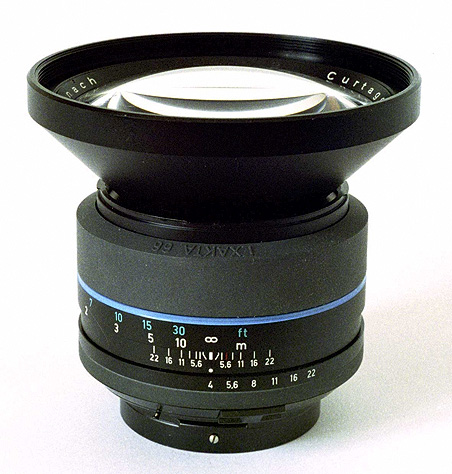
[C370-35A: The “mythical” Joseph Schneider Kreuznach 40mm f/4
Curtagon lens in Exakta 66 mount]
[C370-35A: The “mythical” Joseph Schneider Kreuznach 40mm f/4
Curtagon lens in Exakta 66 mount]
What is the lens that is illustrated at the top of this page?
Is
it the result of some skulduggery in an image manipulation
package? No! It’s a genuine Schneider Kreuznach 40mm
Curtagon lens, now in an Exakta 66 mount. But it wasn’t like
that when I bought it.
 |
Bringing the lens up to the front of the Exakta 66
indicated that infinity focus was possible without fouling
the mirror, so I had to remove the shutter and get it into
an Exakta/Pentacon Six mount. Two people helped me
on this:
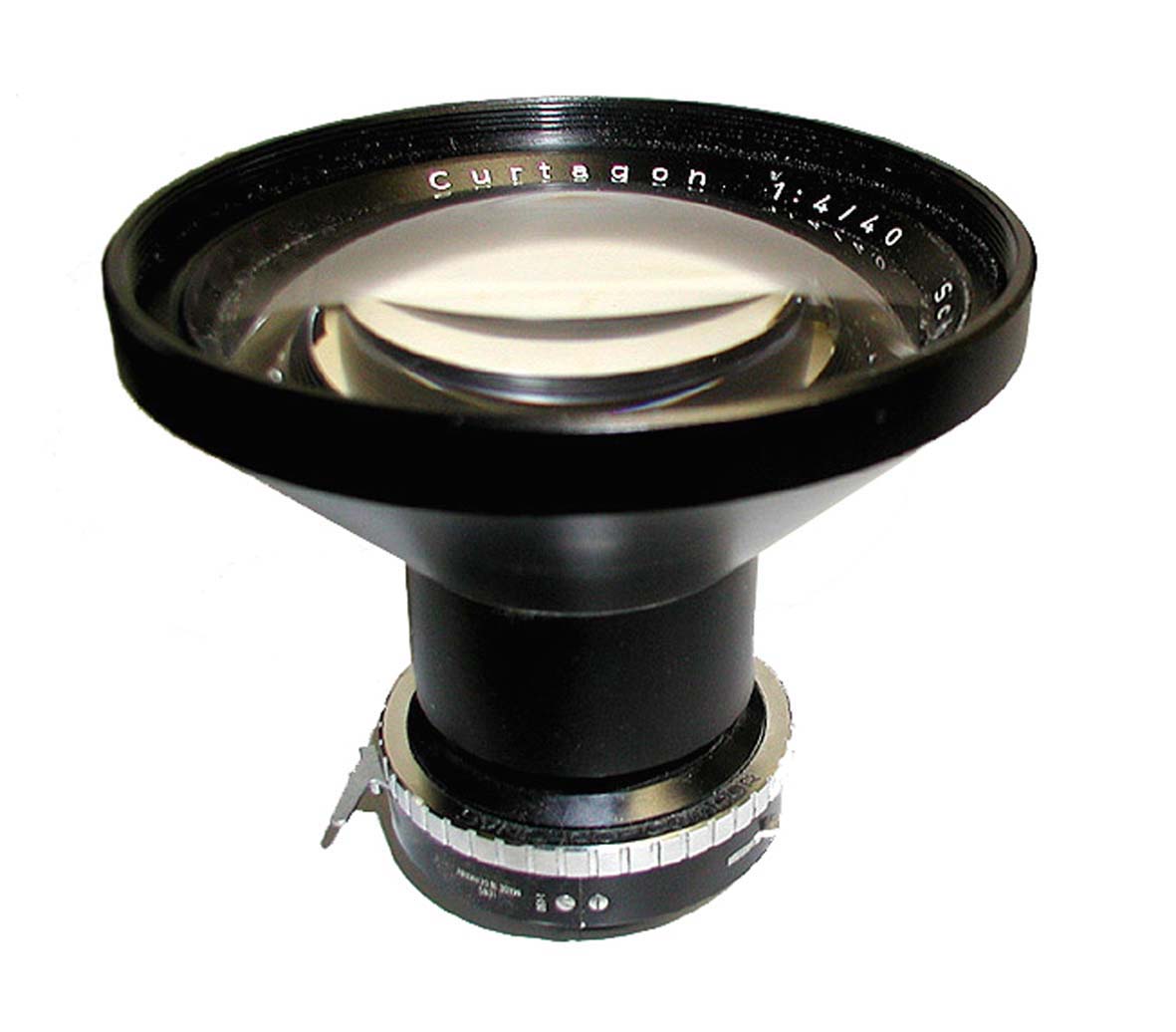
The lens is in two parts: the front component, which
was screwed into the front of the Compur
shutter/aperture unit, and the rear component of three
small elements behind it. |
|
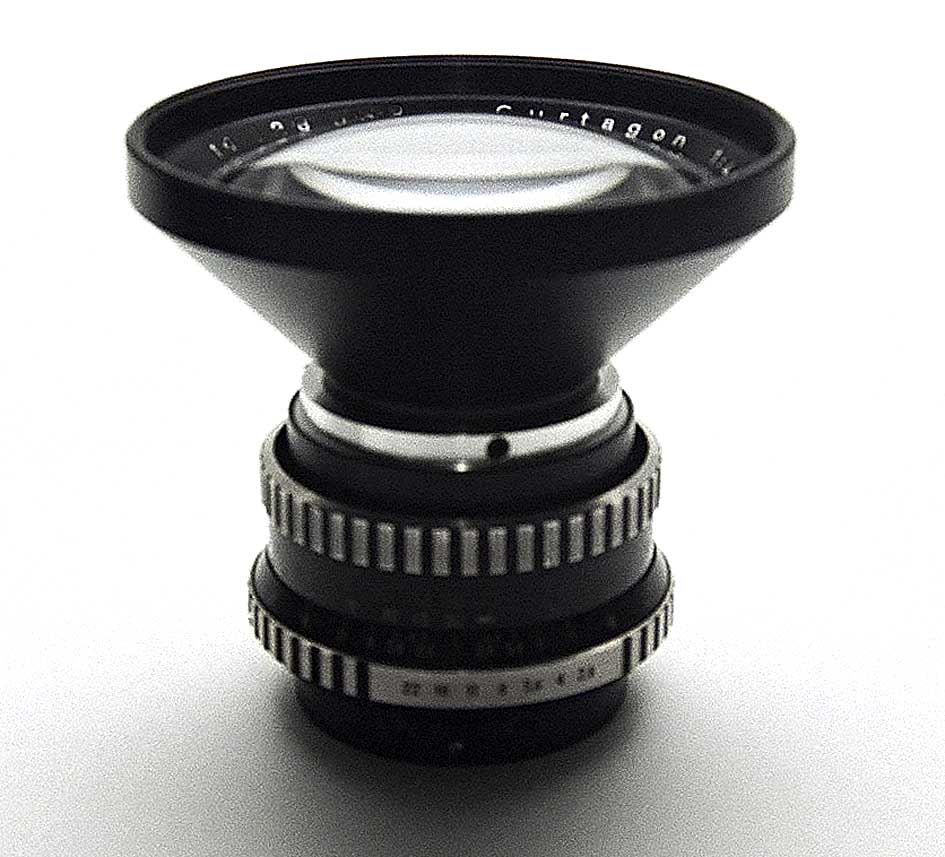
The first stage involved finding a way to mount the lens on the Exakta 66 or Pentacon Six in order to take some test shots. We did this by replacing the Compur shutter unit with a simple tube to maintain the correct spacing between the front and rear components, then making a ring to hold the lens and screw it into the filter thread of an old 80mm Biometar lens from which the elements and the diaphragm had been removed. All pictures would have to be at maximum aperture – a good test of the lens. |
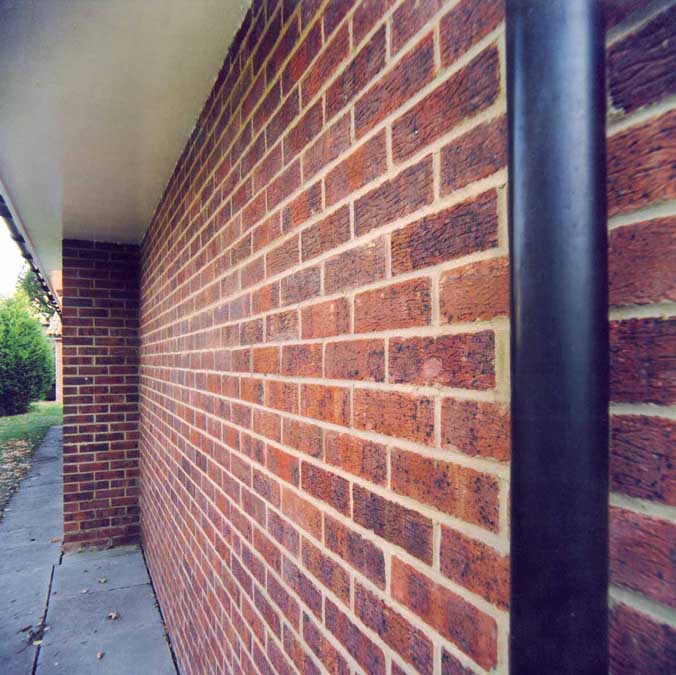
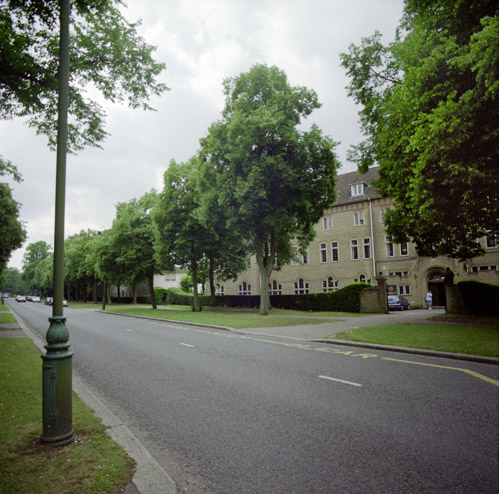 [C342-6 Letchworth Garden City in July] |
A typical bright overcast English summer’s day.
40mm Curtagon at full aperture in the old “zebra” Biometar
mount shown above. No barrel distortion –
which can be a problem with some wide-angle lenses –
and no vignetting – darkening in the corners, another
common problem with wide-angle designs.
I was clearly tilting the camera up in this hand-held shot, hence the inevitable converging verticals, but the lamp post near the edge of the frame is absolutely straight – much better than the results with Arsenal’s 45mm Mir 26B lens! With these excellent results, it was worth taking the project further. I bought an 80mm Exakta lens in Exakta 66 mount from Niclas Walser, and Tom Page removed all the elements for me. (You can see what happened to those spare elements here, fairly near to the bottom of the page.) SRB made a collar that locked onto the front component
of the Curtagon and screwed into the filter thread of
the empty Exakta lens barrel. It was harder work
to design a tiny tube to hold the rear 3 elements at the
correct separation from each other and attach them
behind the aperture that was in the Exakta lens, but
they made a little tube and Tom assembled all the bits.
|
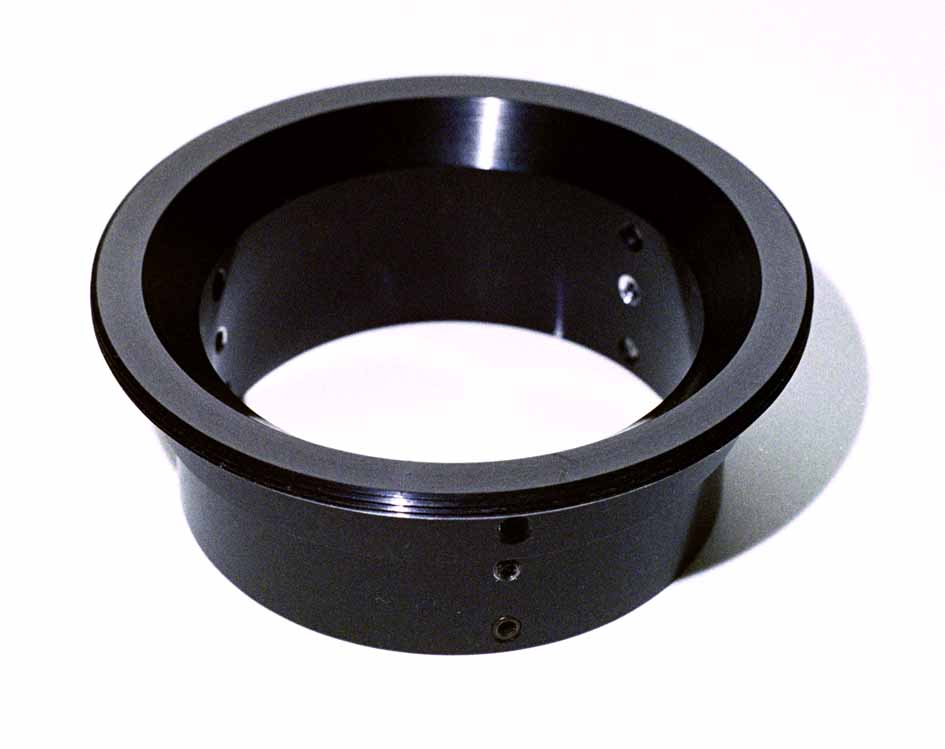
The collar to hold the front component of the Curtagon
Then it was testing time again. This didn’t look bad:
[C358-18/19: Test shot: 40mm Curtagon in Exakta mount 1/15 sec
f/22]
but we needed to get the best adjustment between the front and rear components. They were just not close enough together, leading to some vignetting, and loss of resolution in the corners at the larger apertures. We needed to be able to insert the front component into the lens barrel by a further 2-3 millimetres.
|
SRB did some more trimming of the front of the Exakta
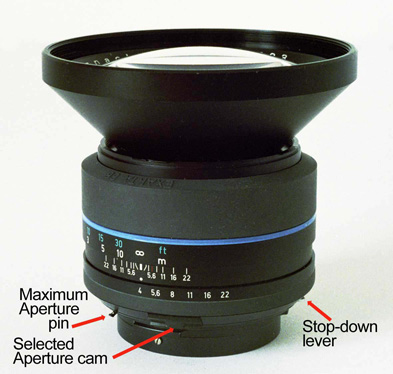
lens barrel and got about 2mm off. Tom adjusted the aperture ring to give the correct readings, and the focussing helicoid on the mount. Then by seeing how other Schneider lenses mated with the Exakta 66 metering prism we were even able to add a pin to tell the meter that the maximum aperture was f/4. Naturally, rotating the aperture ring also tells the metering prism which f/ stop has been chosen. Here’s the finished product. Of course, two things on this mount are wrong: the
focussing scale and the depth of field scale.
However, with the bright Rollei focussing screen in my
Exakta 66 and Pentacon Six cameras, focussing is not a
problem, and of course with a lens of this focal length,
the depth of field is considerable at most working
apertures. |
I would be very interested to hear from anyone who has an “off-the-peg” 40mm Curtagon lens in Exakta 66 mount. Contact me.
But what is the quality of the images delivered by this lens?
To go on to the next section, click below.
The Curtagon Story, Part 3
Back to Part 1 of the Curtagon Story
To go back to the beginning of the lens tests, click below and
then choose the focal length that you want to read about.
Back to beginning of lens tests
© TRA November 2005,
Latest revision April 2013