| Maximise freedom
of choice
Of course, one of the greatest advantages of the 6×6 film
format
is that it is so much larger than 35mm (not to mention the
sensors of digital
cameras!!) that you can easily “crop” images to whatever
format you want,
without compromising on image quality.
Ron Spillman, writing in “Amateur Photographer” about his
preference
for using a medium format camera without a prism, said, “People
who
argue about the ideal format miss the whole point of
6×6cm.
You can always shoot from chest or waist level in
comfort, and afford to
lose a strip from one side.” (17 May
1986)
I would add, “or a strip from the top and/or bottom, for
horizontal
images.” In fact, one of my favourite formats with
my Pentacon Six
is the panoramic format used by the Russian
Horizon/Horizont cameras and
the Japanese Widelux – 24mm high × 56 or 58mm wide –
without incurring
the distortion problems that arise from using a swing lens
camera.
To learn more about taking panoramic photographs with the
Pentacon Six,
click here.
Horizontal or
vertical crop?
Whichever you prefer!
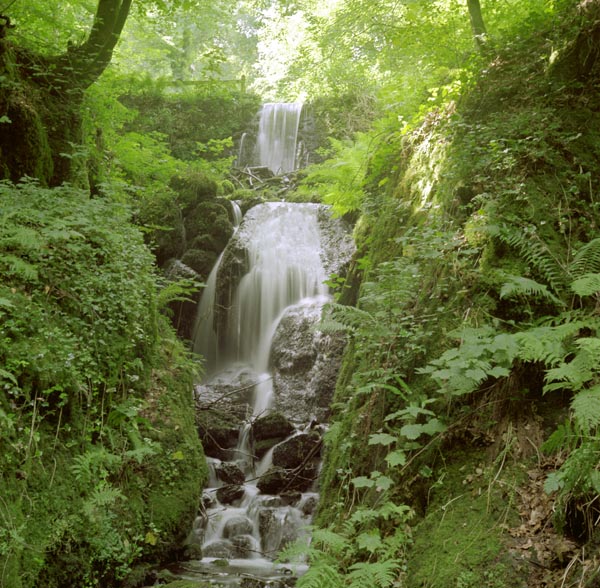
| Here is an example of square composition at the
taking stage.
This picture of Canonteign Falls in Devon was
taken with a Pentacon Six
TL with the standard 80mm Biometar lens focussed
at the hyperfocal distance
to maximise depth of field and exposed for 8
seconds in order to show the
movement of the water.
Exposure on Fuji 100 ISO negative film, lens
aperture f/22, camera mounted
on a tripod.
The resolution of Pentacon Six images is so
phenomenal that it is easy
to crop the image, even quite aggressively, and
still have a high-resolution
result! Scanned at 300 pixels per inch on
my Minolta Dimage Scan
Multi PRO, the scanned image was approximately
88 cm wide and high and
in Photoshop it opened as a file with 305.5
Megapixels! What digital
camera can give you that?
(I obviously needed to reduce the resolution
substantially for use on
this page of this website.)
|
|
 [c248_7.jpg]
|
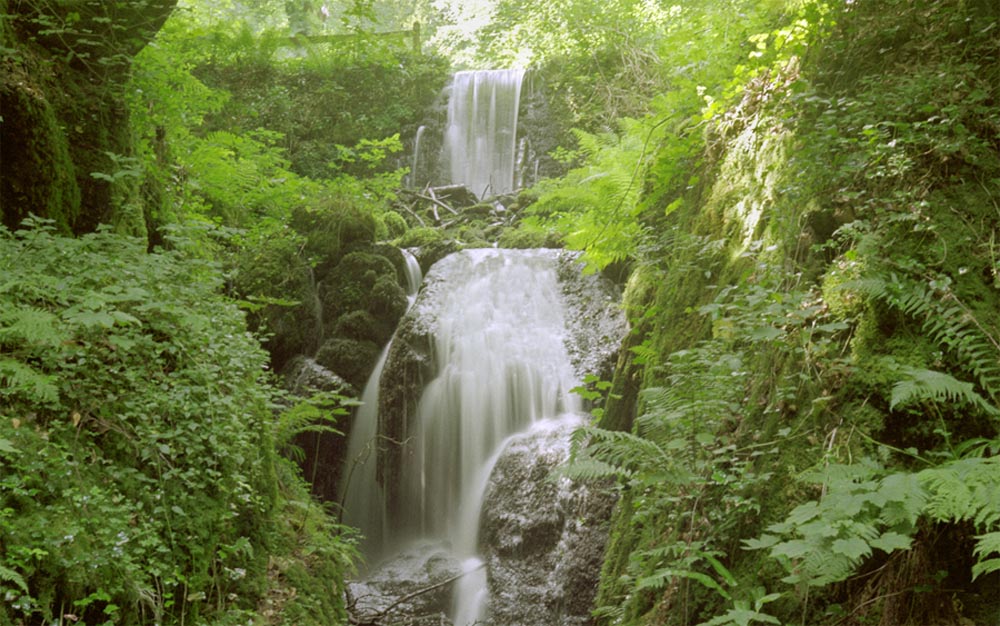
Horizontal crop
A modest horizontal crop resulted in the following image,
which was
used as wallpaper for a (non-photography) website.
[c248_7h1.jpg]
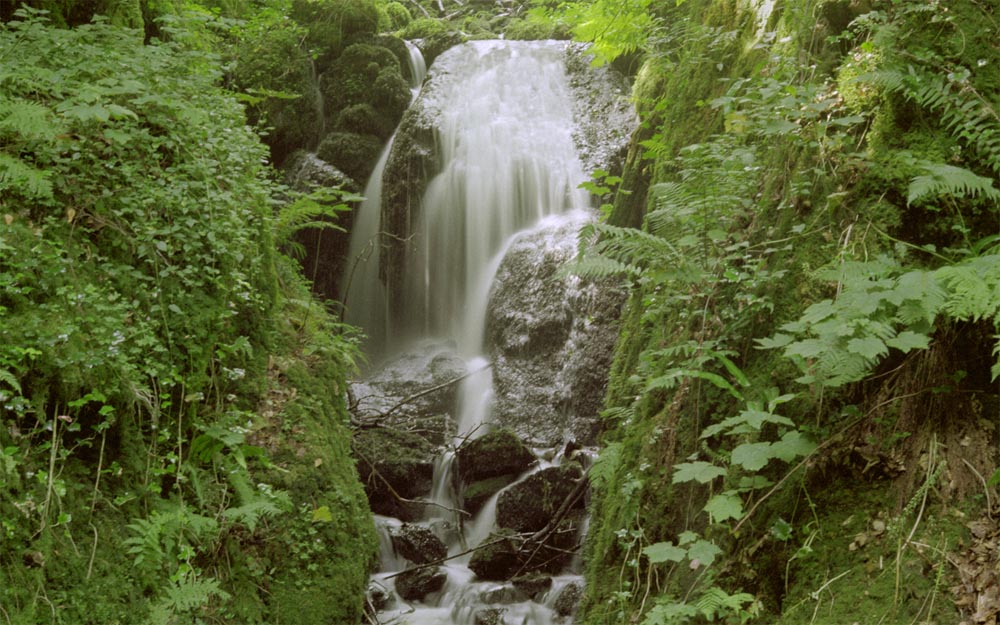
With so much resolution available, other horizontal crops
are possible.
Here is another image from the same frame:
[c248_7h2.jpg]
| Vertical
crop
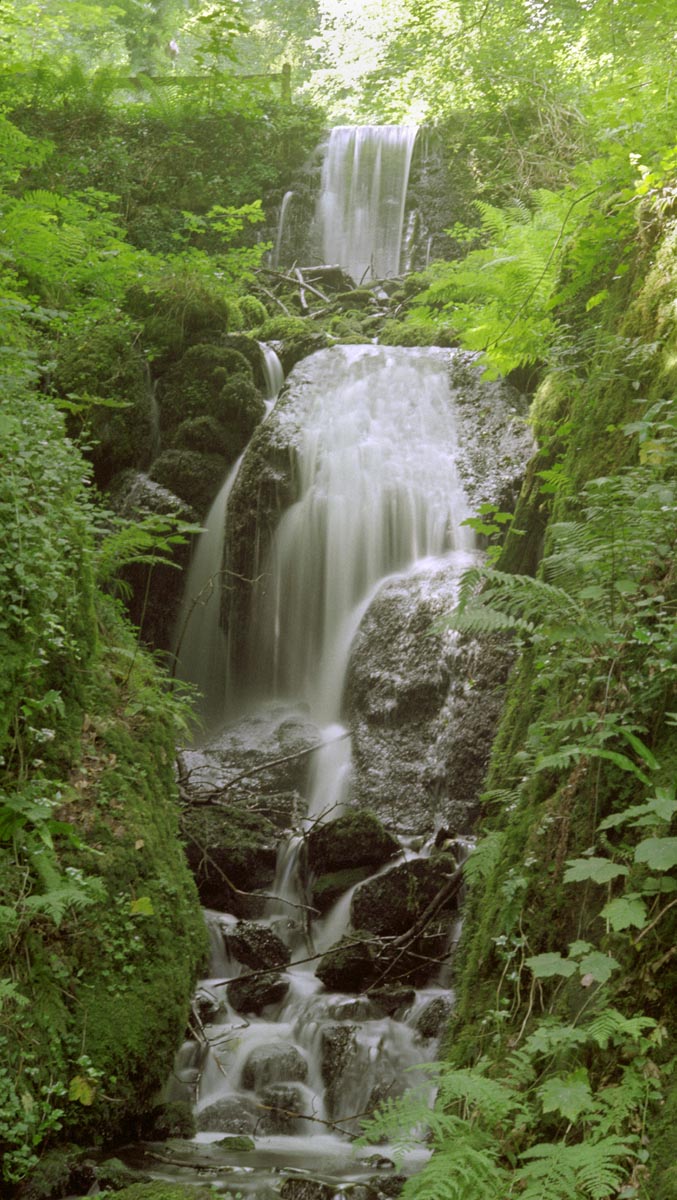
And here is a vertical crop from the same
frame:
It is often said that horizontal images tend to
be tranquil and vertical
images tend to be dynamic, but here we have a
vertical image that, in my
opinion, conveys tranquility.
In fact, we liked it so much that we had a
print made and framed,
to hang in our home. We chose a slightly
wider vertical crop, to
produce a 16 × 20" image and had the picture
mounted on a medium-brown
card that echoes natural wood tones, then framed
in a slim brown wooden
frame with a gold line that helps the mounted
image to stand out from the
frame.
We hope that visitors are reminded of the
beauty of nature and experience
a sense of tranquility as they enter our
home. (These are, after
all, some of the things that photography can
help us to achieve!)
|
|
[c248_7v1.jpg]
|
|