The Pentacon Six
System
by TRA
Lens Data Summary
East German lenses for
the Pentacon Six
Two East German companies manufactured lenses for
the Pentacon Six:
- Carl Zeiss, Jena
- and Meyer-Optik, Görlitz, which later became
part of the Pentacon group, after which the lenses were given
the manufacturer name “Pentacon”.
Carl Zeiss Jena is justifiably considered to be
one of the best lens manufacturers in the world. The
Meyer-Optik/Pentacon lenses in the Pentacon Six mount are also
outstanding lenses that are capable of excellent results.
Carl
Zeiss, Jena
| Lens name |
Max aperture
& focal length |
Type |
Angle
of view
degrees |
Closest
focus
m |
Front
filter
thread |
Length
mm |
Weight
g (1) |
| Zeiss Flektogon |
f/4 / 50 |
FAD (2) |
78 |
0.5 |
M 86 × 1 |
87 |
480 (3) |
| Zeiss Flektogon (4) |
f/2.8 / 65 |
FAD |
64 |
0.75 |
M 86 × 1 |
89 |
480 |
| Zeiss Tessar (5) |
f/2.8 / 80 |
FAD |
. |
1.0 |
M 58 × 0.75 |
50 |
240 |
| Zeiss Biometar (6) |
f/2.8 / 80 |
FAD |
54 |
1.0 |
M 58 × 0.75 |
51 |
260 |
| Zeiss Biometar |
f/2.8 / 120 |
FAD |
41 |
1.3 |
M 67 × 0.75 |
87 |
550 |
| Zeiss Sonnar (7) |
f/2.8 / 180 |
FAD |
24.5 |
1.7 |
M 86 × 1 |
122 |
1100 |
| Zeiss Sonnar (7) |
f/4 / 300 |
FAD |
15.5 |
4.0 |
M 86 × 1 |
224 |
2070 (8) |
| Zeiss Spiegelobjektiv |
f/5.6 / 1000 |
Mirror |
5 |
16.0 |
built-in |
512 |
14000 |
Notes
(1) Various versions of most of
these lens have been produced. As well as cosmetic changes
and addition of multi-coating, some newer versions have a
different body shape and/or are lighter in weight.
To see some information on design changes, click here.
(2) FAD = fully automatic
diaphragm
(3) An earlier version of the 50mm
Flektogon weighed 620g.
(4) The 65mm Flektogon was based
on the five-element Biometar/Planar/Xenotar design, with a
deeply curved additional element added at the front.
(5) Several thousand 80mm f/2.8
Tessars were produced for the Praktisix between 1956 and 1958.
(6) Data in this table refers to
the 80mm Biometar as produced for the Pentacon Six. A
newer version produced for the Exakta 66 has different
dimensions and weight.
(7) The final version of the 180mm
and 300mm Sonnars, produced from approximately 1981 onwards,
incorporates a connector for a special adaptor which transfers
the aperture set on the lens to the electric metering on
Praktica LLC, VLC and PLC 35mm cameras.
(8) A new version of the 300mm
Sonnar produced from approximately 1981 onwards is 204mm long
and weighs 1550g.
Most of this data is based on published
sources. I do not have examples of all of these lenses
(!), and I have not measured or weighed all those that I do
have, although I can confirm the accuracy of the filter
dimensions given.
For further details of the lenses – number of
elements and grouping of elements, variations of the lenses,
etc, I refer you to Nathan Dayton's excellent website, www.commiecameras.com
Most of these lenses are illustrated and tested
in the Lens Test section of this website. To go to the
lens test section, click here.
The 80mm Biometar
and bokeh
To see a report on how the 80mm Biometar performs
at wide apertures and how it handles out-of-focus highlights
(known as "bokeh"), click here.
Zeiss design
variations and serial numbers
Zeiss lenses in the Praktisix/Pentacon Six mount
were produced during a period of 35 years: from 1956 to
1991. Over this period of time, various changes were made
to the lenses. Fortunately, it is possible with the help
of the serial number to date most of the lenses that Zeiss
produced. To see more information on this, click here.
Meyer-Optik,
Görlitz / Pentacon
Meyer-Optik, Görlitz was previously known as Hugo
Meyer, and later as Pentacon-Feinoptisches Werk Görlitz.
For more on the history of Meyer-Optik, see here.
| Lens name |
Max aperture
& focal length |
Elements/
Groups |
Angle
of view
degrees |
Closest
focus
m |
Filter |
Length
mm |
Weight |
Notes |
| Primotar E |
f/3.5 / 80 |
4 / 3 |
. |
0.8 |
49 × 0.75 |
47 |
260 |
(1) (2) |
| Primotar |
f/3.5 / 135 |
4 / 3 |
. |
. |
55 × 0.75 |
. |
. |
(1) (3) |
| Primotar |
f/3.5 / 180 |
4 / 3 |
. |
2.2 |
67 × 0.75 |
153 |
800 |
(1) (3) |
| Telemegor |
f/5.5 / 250 |
4 / 2 |
. |
3.5 |
52mm × 0.75 |
135 (4) |
460 |
(5) |
| Telemegor |
f/4.5 / 300 |
4 / 2 |
16 |
3.3 |
82 × 0.75 |
198 (6) |
1680 |
(1) (2) |
| Orestegor/Pentacon |
f/4 / 300 |
5 / 4 |
16 |
3.6 |
95 × 1 |
189 (7) |
2180 |
(8) |
| Telemegor |
f/5.5 / 400 |
4 / 2 |
. |
5.5 |
82 × 0.75 |
256 |
1580 |
(1) (3) |
| Orestegor/Pentacon |
f/5.6 / 500 |
4 / 4 |
10 |
6.0 |
118 × 1 |
370 |
3500 |
(8) |
Some of the information on the Meyer-Optik lenses
was obtained from Michaels_Photo at members.tripod.de (no longer
available at that web address).
Notes
(1) For the Praktisix (the predecessor of the
Pentacon Six)
(2) For the Praktisix II
(3) Only at the beginning of the production of
the Praktisix
(4) 135mm without lens hood (measured from base
of P6 mount). 165mm with factory lens hood attached
(5) This lens was apparently first available for
Medium Format cameras in the 1930s, but was not produced for
many years in the Praktisix mount. It would appear to
have been available in the Praktisix mount from 1957, but by
the time of the 1963 Meyer lens catalogue it is no longer
listed. Filter data by my measurement, not checked with
a filter.
(6) Michael’s website said 196mm. This
dimension can be found in some Meyer literature. My
300mm f/4.5 Telemegor is 198mm long. This is without the
lens shade that was normally supplied with the lens.
Adding that results in an overall length of 252mm, according
to Meyer literature from the 1960s.
(7) Michael’s website said 198mm. I think
that this was a transposing error. My Orestegor is 217mm
long with the hood, which is normally left in place, but 189mm
without the hood.
(8) For Praktisix, Pentacon Six and Pentacon Six
TL. Produced until 1990.
All of these lenses except the 80mm Primotar
E were manual pre-set lenses only, having no
automatic-aperture pin. The Primotar had an FAD pin, plus
a pre-set ring on the front of the lens.
Michaels_Photo also listed another version of the Primotar, an
f/3.5 85mm lens with 4 elements in 3 groups and a filter size of
40 × 0.5. This lens can be seen on a Praktisix on the cover
of the book “Mittelformat Ost”. However, the serial number
of that lens pre-dates the introduction of the Praktisix, so
it is obviously a privately-made adaptation of an older lens,
possibly from a Meister Korelle mount.
The
older lenses: the Telemegors
Before the
introduction of the Orestegors, Meyer produced other
telephoto lenses with the name “Telemegor”.
These are of an older and different design from the
Orestegors. The oldest Meyer-Optik brochure
that I have, which is also labelled “VEB
FEINOPTISCHES WERK GÖRLITZ”, appears to be from
1957. Some pages from it can be seen here. It
lists four Telemegor lenses:
- Telemegor 1:5,5/180
- Telemegor 1:5,5/250
- Telemegor 1:4,5/300
- Telemegor 1:5,5/400
We note the older German notation
style, putting a “1:” before the indication of the
maximum aperture. This style was subsequently
abandoned in East Germany, but generally retained by
West German manufacturers. We also note the
comma, instead of the dot between the first and the
second part of the aperture designation.
All four of these are listed for 24 ×
36 (35mm) format, but only one of them, the 300mm
Telemegor, is also listed as being for 6 × 6
format. In spite of this, there is evidence that
some other Telemegors were occasionally available for
6 × 6 cameras, including the Praktisix and
subsequently the Pentacon Six.
|
The 250mm Meyer-Optik
Telemegor
I am grateful to Kenneth Loen for these
pictures of the seldom-found 250mm Telemegor in the
Praktisix (or Pentacon Six) mount.
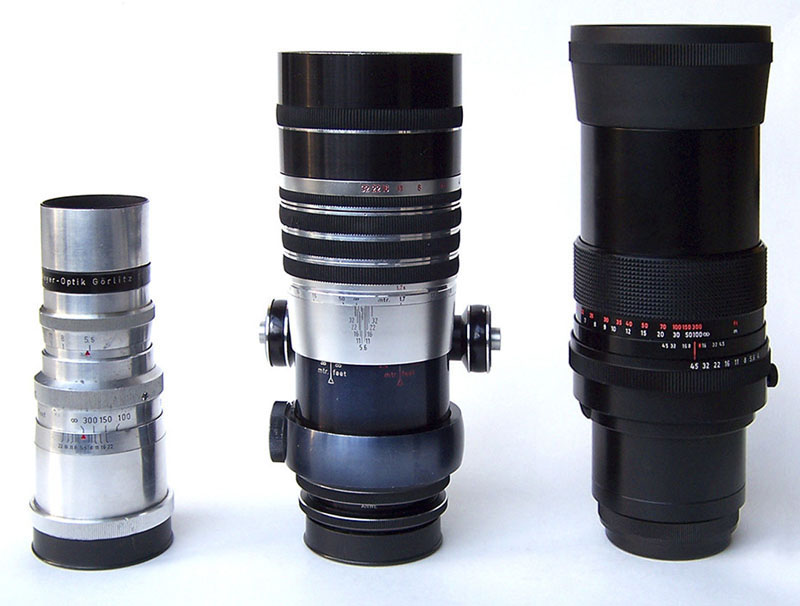
L to R: 250mm f/5.5 Telemegor,
300mm f/4 Pan-Tele-Kilar, 300mm f/4 Zeiss Sonnar
The more modest maximum aperture of the
Telemegor resulted in a much smaller and lighter
lens. It is shown here with its lens hood
fitted (and the Sonnar has the later, smaller,
hood that does not require the 95 to 86mm
adapter ring).
|
|
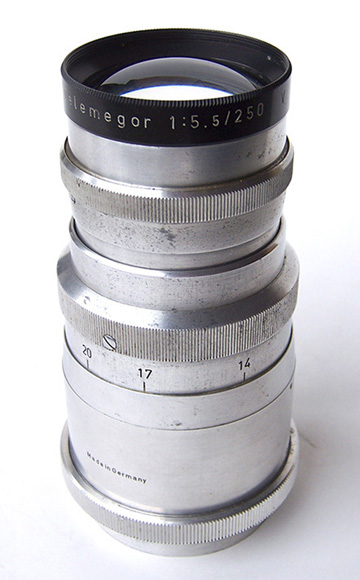
The Telemegor with its lens hood
removed.
This lens was produced at a time before the East
Germany régime decided that the phrase “Made in
the G.D.R.” or “DDR” had to be used on all
manufactured goods; it merely states, “Made in
Germany”. |
|
The
300mm Telemegor
The 300mm f/4.5
Telemegor lens was listed by Meyer from at least
1957, as indicated above, and in those of their
brochures that I have it is last seen in 1966,
after which it was replaced by the 300mm f/4
Orestegor.
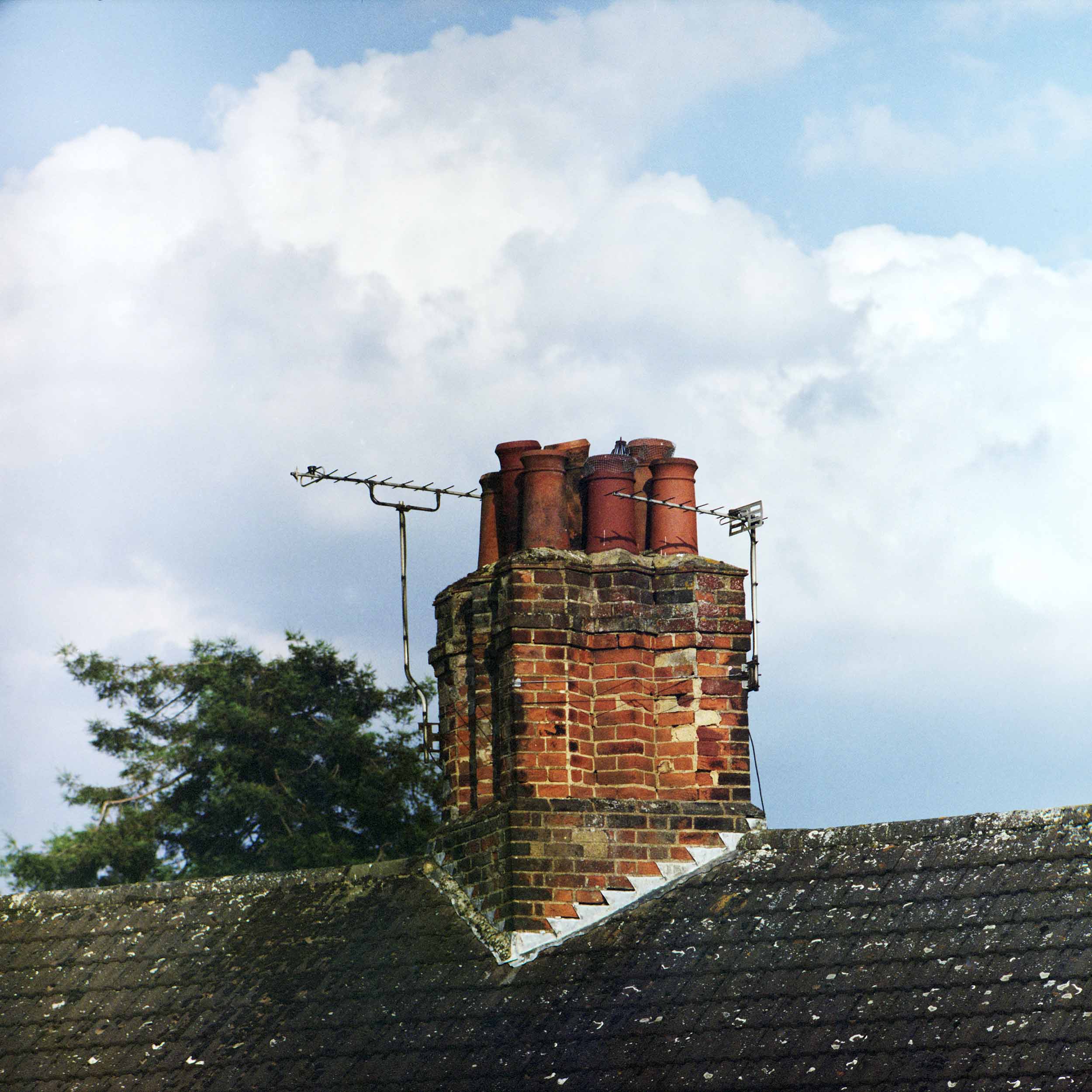
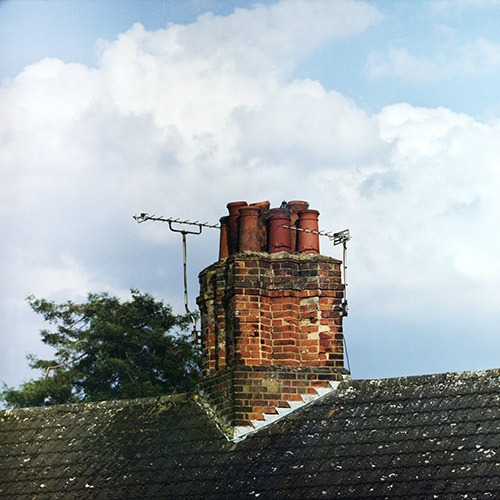
An image taken recently with one of these lenses
is show to the right. It clearly fully
covers the 6 × 6 format without vignetting, and
the image has excellent sharpness. Click
on the image to the right to see it larger. With most browsers, a second
click on the enlarged image will enlarge it
still more.
It is possible to see examples of pictures of
the same scene taken with lenses of other focal
lengths here.
An equivalent picture taken with a 300mm
Orestegor can be seen lower down this page.
|
|
[C571_17_300_Telemegors.jpg]
|
The 300mm lenses
compared
|
|
|
|
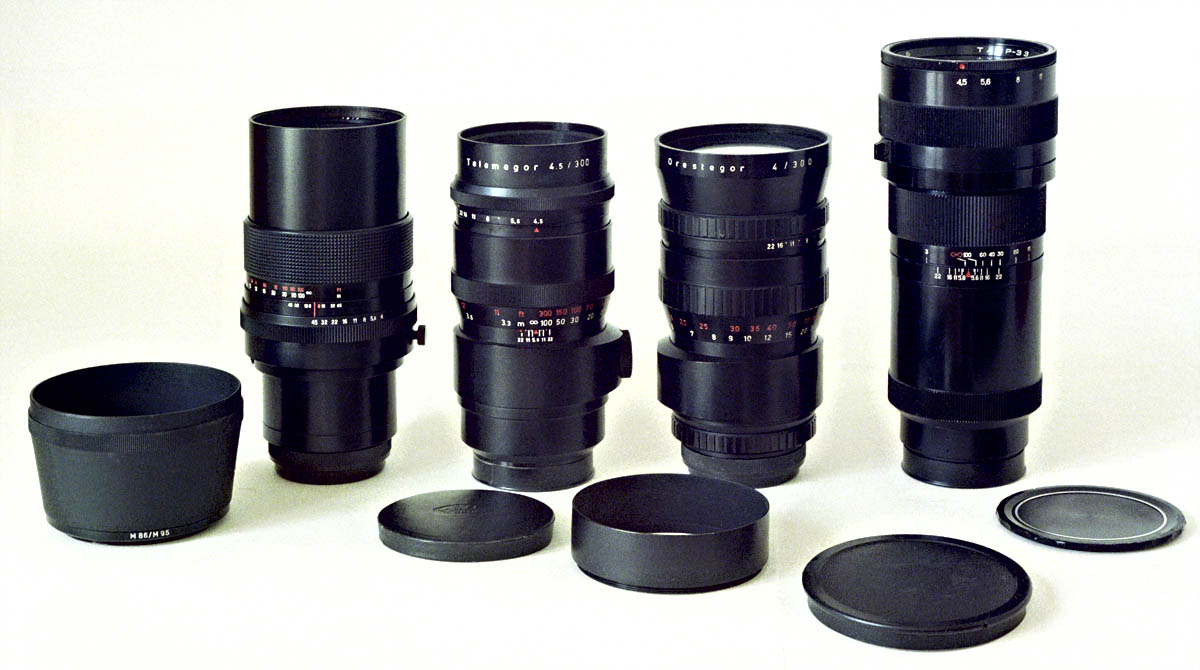
To the right, four 300mm lenses in Pentacon
Six mount. From left to right:
Carl Zeiss Jena Sonnar (the only lens in this
picture with automatic aperture operation),
Meyer-Optik Telemegor, Meyer-Optik Orestegor,
and the Soviet Tair-33.
The Sonnar lens hood can be seen to the left
of the lens and the Hugo-Meyer cap is in front
of the Telemegor.
The Orestegor was supplied with a shallow
hood, illustrated off the lens, plus a cap
(out in front). In practice, most users
leave this hood on the lens at all times, and
the cap fits it.
The Tair has an etremely shallow retractable
hood and a screw-in metal cap.
To see a detailed review of the
Kilfitt Pan-Tele Kilar, click here.
|
|
[C436-21] |
|
| The
400mm Telemegor |
|
|
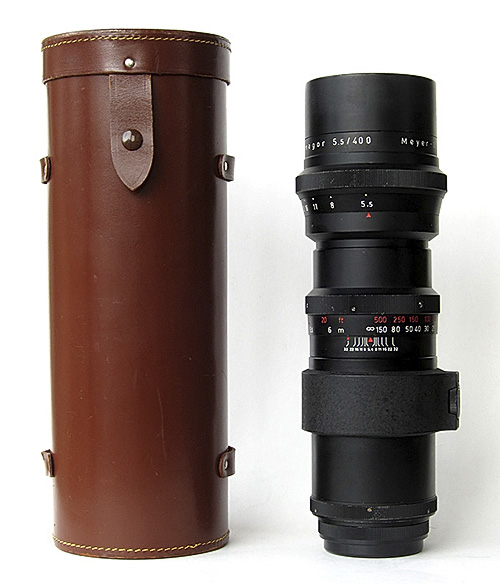
Image on the far
right: the seldom-seen Telemegor f/5.5 400mm
lens in Praktisix/Pentacon Six mount, pictured
with its original case. Both the lens and
the case are in excellent condition, although
the stitching for the base of the case needs to
be replaced.
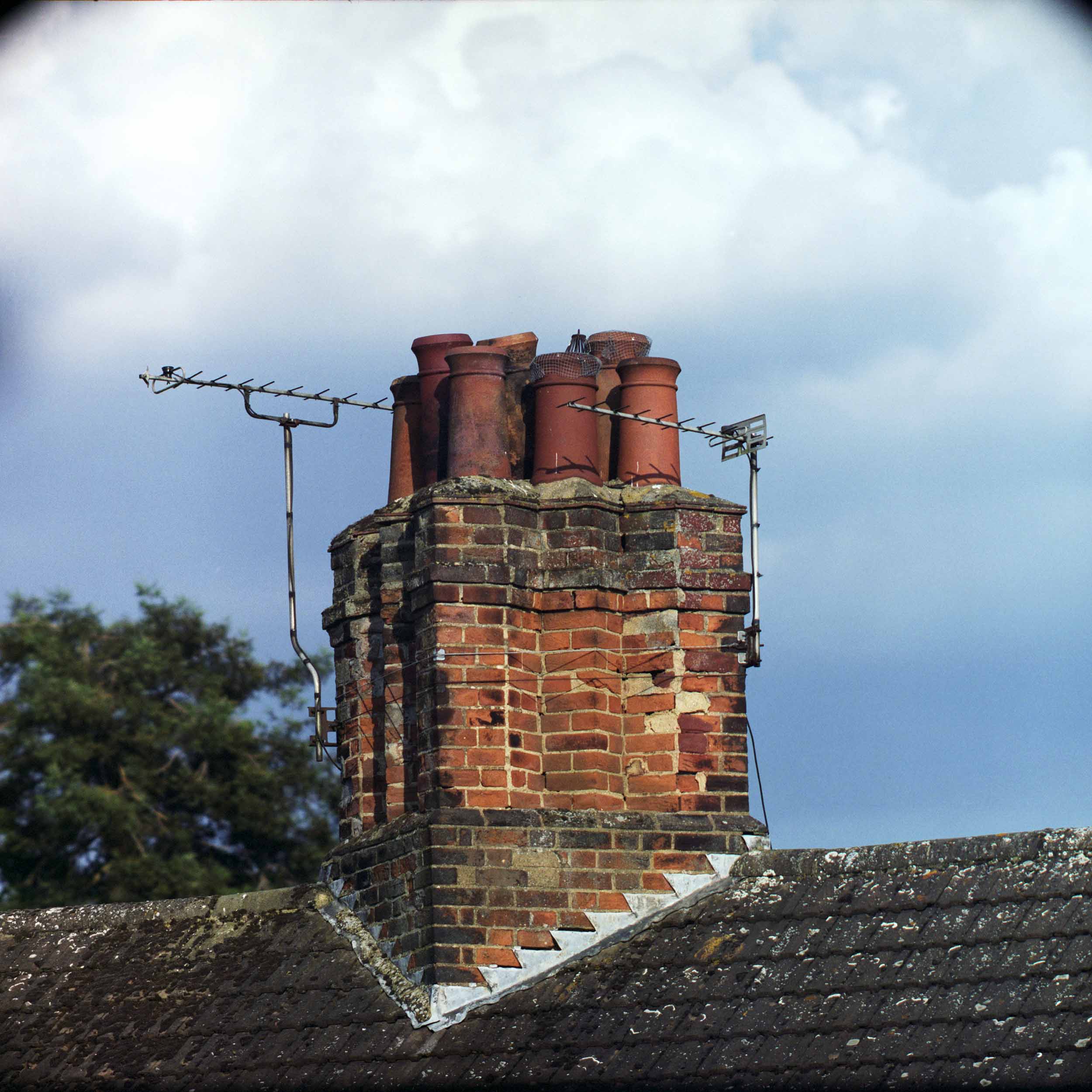
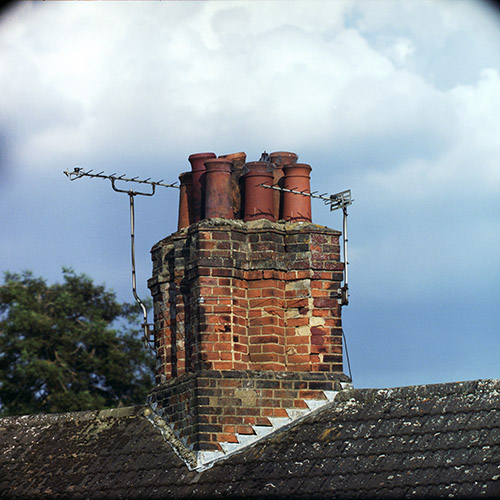
To the right
I reproduce an image taken recently
with this 400mm Telemegor.
Unlike the 300mm Telemegor, it does
not fully cover the 6 × 6 format: we
observe vignetting in the top
corners, and it may indeed also be
present in the bottom corners,
although with the dark roof, it is
not noticeable there.
Nevertheless, the image has
excellent sharpness, and with a tiny
amount of cropping, the results
would be perfectly
satisfactory. Click on the
image to the right to see it
larger. It is possible to see
examples of pictures of the same
scene taken with lenses of other
focal lengths here.
|
|
[C571_14-15_400_Telemegors.jpg]
|
|
|
[telemegor400_3_s.jpg
Image courtesy of Kenneth Loen
|
Telemegors were last
listed in the Meyer catalogue in 1966. Michaels_Photo
said that only the two Orestegor/Pentacon lenses are
significant for users. “They are excellent telephoto
lenses what were built until 1990 in several
versions”.
|
|
|
The
newer lenses: the Orestegors
As indicated
above, the Telemegor was discontinued after the
production run(s) for the Praktisix and Praktisix
II. It was replaced by the Orestegor, which was
half a stop faster. Later on, the Orestegor was
re-named “Pentacon” when the Hugo Meyer factory, which
was already under State control, was absorbed into the
State-owned Pentacon organisation.
The 300mm f/4 Orestegor is first listed by Meyer in
1967. See the cover of the brochure and the
relevant page here.
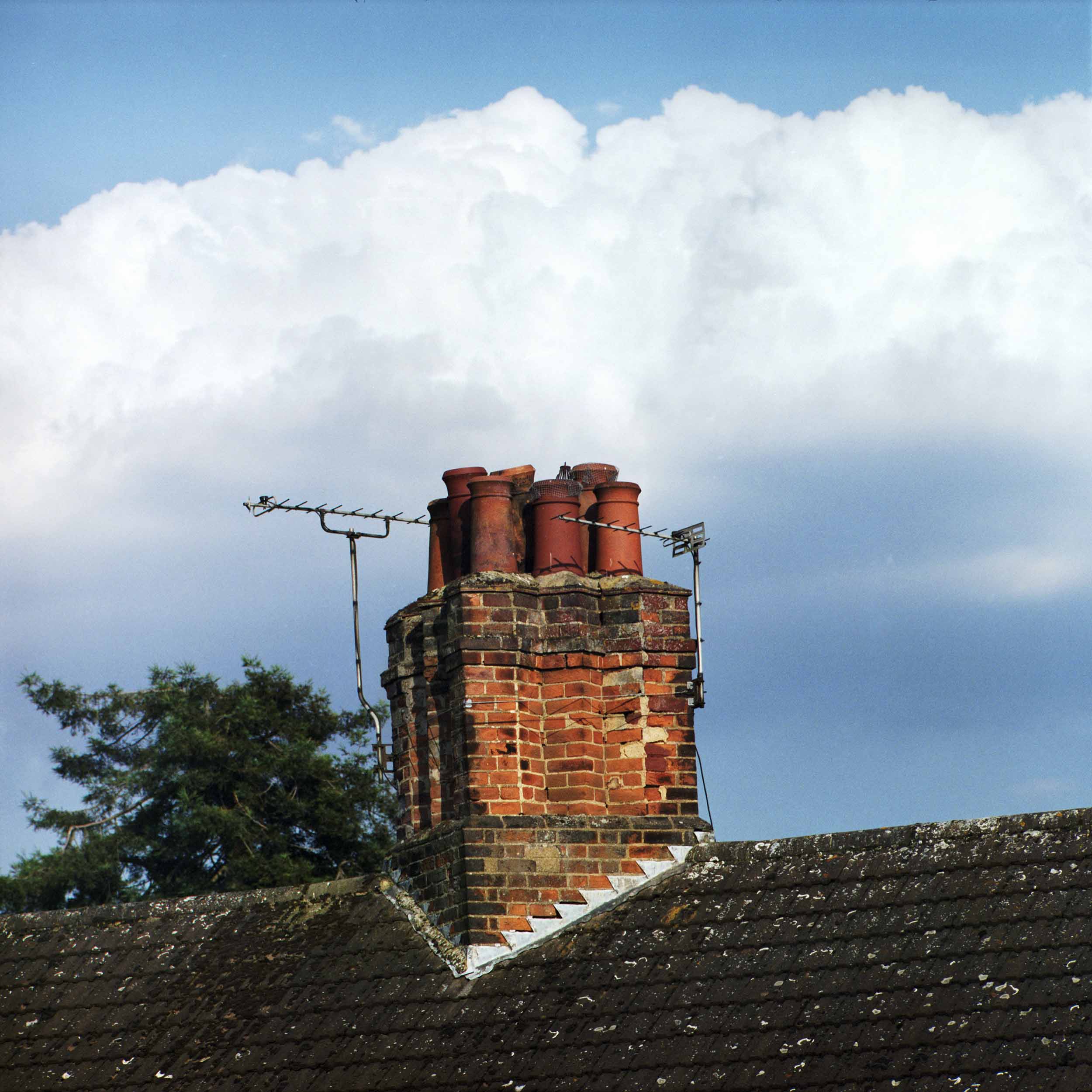
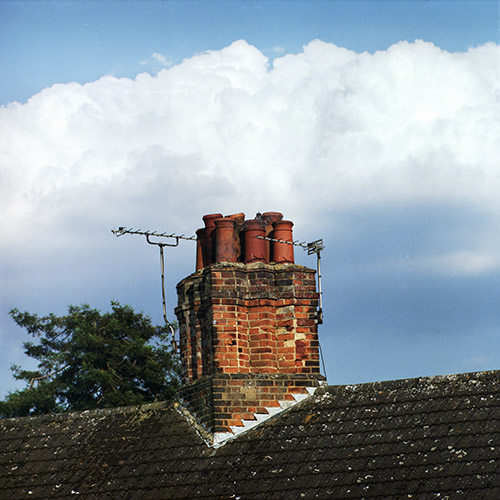
To the right
I reproduce an image taken recently with a 300mm
Orestegor. Like the older Telemegor, above, it
clearly fully covers the 6 × 6 format without
vignetting, and the image has excellent
sharpness. Click on the image to the right to
see it larger. It is possible to see examples of
pictures of the same scene taken with lenses of other
focal lengths here.
The 500mm Orestegor appears to have been first listed by
Meyer in 1966. See the cover of the brochure here. This lens
was produced until at least 1990, and possibly for a
year or two after that. See the lens tests for
500mm lenses, starting here,
and the page on lenses “Made in Germany” here. A similar
test picture taken with the 500mm Orestegor can be seen
near the bottom of this page.
|
|
[C571_11-12_300_Orestegors.jpg]
|
|
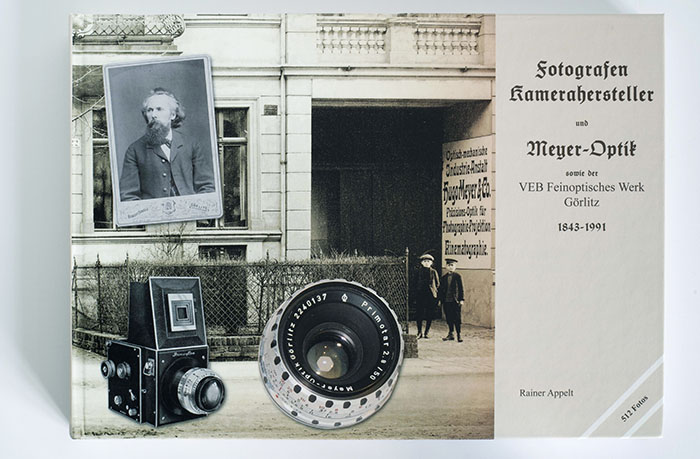
Book
in German on Meyer-Optik, Görlitz
|
|
“Fotografen,
Kamerahersteller und Meyer-Optik sowie der VEB
Feinoptisches Werk Görlitz 1843-1991”
by Rainer Appelt, who had a leading position at
Meyer-Optik, Görlitz, then known as VEB
Feinoptisches Werk Görlitz, from 1970 until the
end of the GDR.
242 pages, 512 photos, high quality full-colour
printing in horizontal format
Published 2019 Price €29,95 + postage &
packing costs
Available only from the author at
m.r.appelt@web.de
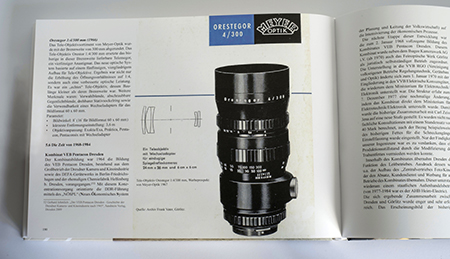 The 300mm Orestegor/Pentacon for
the Pentacon Six
The 300mm Orestegor/Pentacon for
the Pentacon Six
|
|
To go on to the next section, click below.
Next section (Further information on
Zeiss lenses)
To go back to the beginning of the Lens Data section, click below
and then choose the range of lenses that you want to read about.
Back to beginning of the Lens Data section
Home
© TRA May 2002
Latest revision, December 2019 Minor improvement September 2022